Ship Time on a Cruise: Why the Ship's Clock Beats the Port's
Every year passengers sprint down piers toward departing ships, defeated by a one-hour lie between two clocks. This short explainer covers ship time - the smallest fact with the biggest penalty.

There are two clocks in every port of call, and only one of them can strand you. Ship time on a cruise is the time the ship keeps — set by the captain, printed in the daily programme, shown in the line's app — and it is the time by which the gangway closes. Local port time is whatever the clocks ashore say. On many itineraries the two agree all week. On some, they differ by an hour, sometimes two, and the difference is invisible until it is expensive: the ship sails on its own clock, and a traveller navigating by the port's has already missed it. This short explainer covers how ship time works, why lines handle it differently, and the habits that make the trap impossible to fall into.
Ship time on a cruise: how the two practices work
Lines that move the clock, and lines that hold it
Cruise lines split into two broad practices. Some adjust ship time as the ship crosses time zones, so that ship time and port time match in most calls — the change is announced the night before, in the daily programme and usually with a reminder in the cabin. Others hold ship time on the departure port's zone for all or part of an itinerary, particularly on short loops where the ports sit one zone away: the ship's day stays stable for crew and passengers, and the port runs an hour different. Neither practice is hidden. What varies is only whether the traveller notices. Every line publishes the operative facts the same way: the daily programme prints the day's times, the app mirrors them, and the all-aboard time is posted at the gangway as you leave — Virgin Voyages' port guidance, for instance, directs sailors to gangway signage showing the "all onboard" time for each call (Virgin Voyages disembarkation FAQ, checked October 2026). The information is never secret; it is merely easy to walk past.
Why the ship will not wait
The consequence side needs stating without drama and without invented statistics: a ship that misses its berth window, tide or pilot slot creates costs and knock-on delays for thousands of other passengers, so departure times are treated as fixed. Passengers on the line's own excursions are protected by the line's return arrangements; independent travellers are protected by nothing but their own margin. Being left in port is recoverable — port agents exist, the ship's agent's contact details are printed in the daily programme, and rejoining at the next port is a known procedure — but it is expensive, document-dependent and entirely avoidable. It is also, not coincidentally, one of the classic failure modes catalogued in cruise mistakes first timers make.
Ship time on a cruise: the phone problem and the mechanical fix

Your phone is lying to you ashore
The modern version of the trap is not a forgotten watch; it is an obedient smartphone. Step ashore in a port an hour ahead of ship time and the phone quietly updates to local time, while the ship does not. Every glance at the phone then confirms a wrong return time with total confidence. The defences are boring and complete: set one device — a watch, or the phone with automatic time-zone updating switched off — to ship time before you leave the ship, and treat that device as the only authority until you are back aboard. Virgin Voyages' port information FAQ illustrates how line guidance is organised around exactly these fixed points — arrival times, port procedures and the ship's own instructions in the app (Virgin Voyages port information, checked October 2026).
Build the buffer so the difference cannot matter
The stronger defence makes the ship-versus-port question irrelevant: plan to be back at the gangway well before all-aboard, with the margin sized to the port — longer where tenders, traffic or distance are involved. A traveller back an hour early never has to know whether the clocks agreed. Pair the buffer with a sense of what the port day is actually for — the framework in what to do in port on a cruise builds the day backwards from the return, which is the only direction that works. Do that, keep one honest clock, and ship time on a cruise becomes what it should be: a fact you read once in the daily programme, not the story of your holiday. The ports themselves, and what each one demands, are mapped at our destinations hub.
| Situation | Ship time vs port time | The risk | The defence |
|---|---|---|---|
| Line adjusts clocks nightly | Usually identical in port | Complacency on the one itinerary that differs | Read the daily programme anyway |
| Line holds homeport time | Port may run one or two hours different | Phone auto-sync shows port time | Manual watch on ship time |
| Tender port | Same clock problem, slower return | Last tender leaves before all-aboard pressure peaks | Return one tender earlier than instinct says |
| Independent excursion ashore | Operator may quote local time | Start and return times in different clocks | Confirm every time in writing: "ship time or local?" |
Frequently asked questions
How do I know what ship time is today?
It is printed in the ship's daily programme, shown in the line's app, and posted at the gangway as the all-aboard time when you go ashore. If the ship is changing clocks overnight, the change is announced the evening before. When in doubt, ask at guest services — it is the most routine question they field.
Does ship time always match the port?
No. Some lines adjust to each port's zone; others hold the homeport's time for stretches of an itinerary, so the port can run an hour or more different from the ship. The itinerary alone does not tell you — the daily programme does, which is why it is the authority.
What happens if I actually miss the ship?
Contact the line's port agent — the details are in the daily programme — who will advise on rejoining at the next port. Travel to that port is at your own expense, and flying internationally requires a passport, which is one reason carrying proper documents ashore matters. It is recoverable, disruptive and avoidable in roughly equal measure.
Is all-aboard the same as departure time?
No. All-aboard is earlier — the time by which every passenger must be back on the ship, posted at the gangway and in the daily programme. Departure is when the ship sails. Plan against all-aboard, and treat the gap between them as the ship's working margin, not yours.
Conclusion: ship time, kept without the scramble
The bottom line: ship time on a cruise is the only clock with consequences. Read it in the daily programme, pin one device to it, and come back early enough that the port's clock never gets a vote. Plan the day itself with what to do in port on a cruise, and explore the ports at our destinations hub.
See the deals, total price first
Every deal we list will show the total — fare, taxes and port fees included — before you pay. That is the rule the deals page is being built to.
Browse cruise dealsNever overpay after you book
Once sign-ups open at launch, our price-drop alerts will watch the sailing you care about and flag it when the fare moves.
About price-drop alerts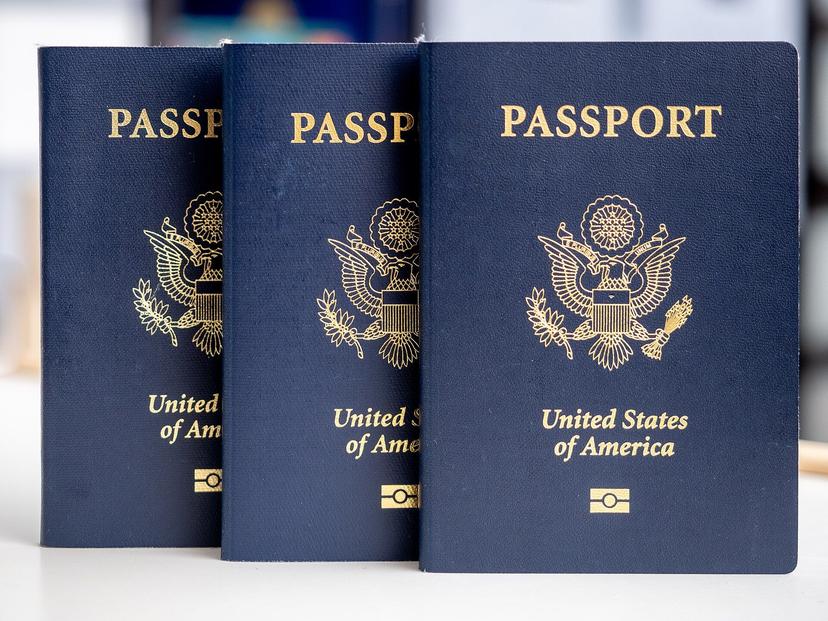


Search cruises
Every result shows the total for your cabin — taxes and port fees included.