Seasickness on a Cruise: What Actually Helps, From the Evidence
Motion sickness is a sensory-conflict response — your balance system and your eyes reporting different motion — per CDC and NLM descriptions. It is common, temporary and not dangerous for most people, and it usually eases as the body adapts over a day or two. The seasickness remedies that actually help are the ones matched to your sensitivity, and this guide ranks them from cabin choice to medication timing.

Seasickness on a cruise is the fear most out of proportion to its reality — and the topic where cruise content is at its least honest, mixing stabiliser statistics, cabin folklore and remedy marketing into one confident blur. This guide sorts it the referee's way: facts from the US Centers for Disease Control and Prevention's motion-sickness guidance and the National Library of Medicine's references first, myths labelled as myths, and a hard editorial line throughout — this is general information only. It gives no diagnosis, no dosage instructions and no product recommendations. If motion sickness is a medical concern for you, the person to consult before sailing is your own clinician or pharmacist, with this page as background reading.
Seasickness on a cruise: the mechanism, plainly
The CDC's account of motion sickness is the one to trust: it arises when the motion your inner ear senses does not match what your eyes see — reading below deck in a moving cabin is the classic provocation, because your eyes report stillness while your vestibular system reports the sea. Symptoms build from unease through nausea, and susceptibility varies widely between people and across a lifetime; the NLM notes it is more common in children between roughly 2 and 12, in women (particularly around hormonal changes), and in people with migraine.
Two consequences for cruisers
Two consequences matter for cruisers. First, susceptibility is personal and partly predictable from your own history in cars, boats and fairground rides — your past is better evidence than any ship statistic. Second, adaptation is real: most sufferers improve markedly after the first day or two at sea as the brain recalibrates, which is why short cruises deserve a different risk assessment from week-long ones — a three-night sailing offers less time to adapt.
Stabilisers and cruise ship size: what the hardware does about seasickness

Large modern cruise ships carry retractable fin stabilisers that counteract roll — the side-to-side motion that provokes symptoms most. The honest limits: stabilisers are less effective at very low speeds and do little for pitch (the fore-and-aft rise and fall) or heave; and in heavy weather, no stabiliser system makes a ship motionless. Ship size helps by physics rather than by gadget — a 150,000-ton vessel moves more slowly and through smaller angles than a small boat in the same sea, which is why the "big ships don't move" claim is half true: they move less, more slowly, and most passengers on most itineraries in normal weather feel little. Itinerary matters as much as hull: sheltered routes (inside passages, island chains, the protected waters many of our destinations guides describe) are calmer than open-ocean crossings, and season matters — the same route in different months is a different sea.
Cabin position: the one lever you fully control
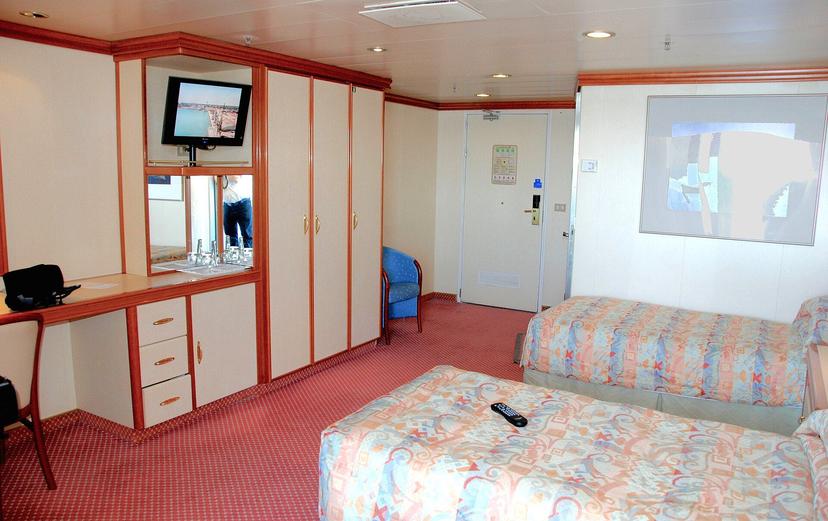
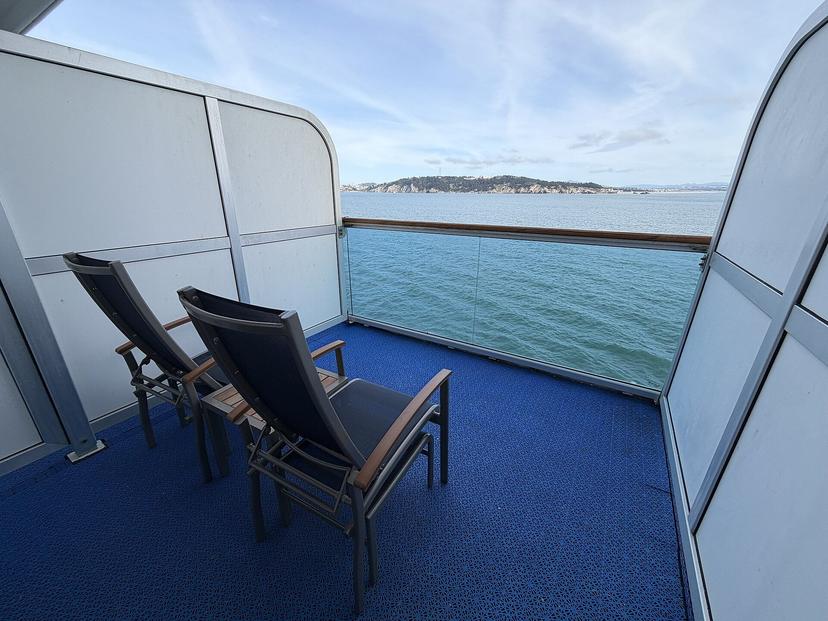
Motion aboard a ship is smallest near its centre of rotation — low and midship — and largest at the bow, the stern and on high decks, where the same angular roll becomes a longer arc. This is geometry, not opinion, and it is why cabin selection is the strongest non-medical tool a prone traveller has: a midship cabin on a lower deck, ideally with a window or balcony so your eyes can confirm the motion your body feels. Our best cabin location on a cruise ship guide weighs that against noise and convenience; for a genuinely prone sailor, motion should win the argument. Behaviour aboard helps too, per CDC guidance: spend time on deck with the horizon in view, avoid reading or screens in rough patches, take fresh air, and eat lightly — heavy meals, strong odours and alcohol work against you.
Remedies: evidence, folklore and the line between
CDC and NLM sources discuss several remedy categories, and the referee's summary is deliberately flat. Medicines exist — certain antihistamines and a prescription anticholinergic are the standard medical options referenced in the literature — with real effects and real side effects, prominently drowsiness; timing and suitability are individual medical questions, and this guide states no doses and names no products to buy. Ginger has been studied for nausea with mixed-to-modest support; it is a food, and trying it is a low-stakes personal choice rather than a treatment plan. Acupressure wristbands are widely sold; the evidence base is weak and inconsistent in controlled studies, and they are harmless folklore for most people rather than proven prevention. Alcohol as a remedy is a myth that worsens balance and nausea.
The most reliable remedy
And the most reliable "remedy" in the sources is the unglamorous one: exposure and adaptation, horizon-watching, and choosing the ship, season and cabin to reduce the provocation in the first place. First-timers working through the practicalities should pair this page with our first cruise checklist.
| Claim | Verdict from CDC/NLM-grade sources |
|---|---|
| "Modern ships don't move" | False as stated — stabilisers reduce roll; pitch and storm motion remain |
| "Midship, low cabins move least" | True — geometry: smallest arc near the centre of motion |
| "You adapt after a day or two" | Generally supported — adaptation is a documented pattern |
| "Ginger cures seasickness" | Overstated — studied, with mixed-to-modest support for nausea |
| "Wristbands prevent it" | Unproven — evidence in controlled studies is weak and inconsistent |
| "A drink settles the stomach" | Myth — alcohol worsens balance and nausea |
Summary only; the sections above carry the sourcing and the caveats.
Frequently asked questions
How likely am I to get seasick on a cruise?
It depends on your personal susceptibility, the itinerary and the weather more than on the ship. Most passengers on large modern ships in normal conditions experience little or nothing; people prone to motion sickness in cars and small boats should plan as if they will feel something on at least the first day, and take medical advice before sailing if that is a concern.
Do cruise ship stabilisers stop seasickness?
They reduce roll substantially and help many passengers, but they do not eliminate ship motion — particularly pitch in head seas or any motion in a storm. Treat stabilisers as one factor among ship size, route, season and cabin position, not as a guarantee.
Where is the best cabin to avoid seasickness?
Low and midship, near the ship's centre of motion, ideally with a window or balcony for a horizon view. Bow and stern cabins and high decks move through the largest arcs. If motion is your deciding factor, let it outrank view and deck prestige when you book.
What should I take for seasickness?
That is a medical question this guide deliberately does not answer with products or doses. CDC and NLM sources describe the medicine categories doctors and pharmacists work with; a pharmacist can advise on suitability, interactions and timing for you specifically — ask before you sail, not at the ship's medical centre.
The referee's verdict in this seasickness on a cruise
Seasickness on a cruise is a manageable, well-understood risk — badly served by both the sellers who promise motionless ships and the storytellers who promise misery. The evidence supports a calmer plan: pick a big ship, a sheltered route and season, a midship cabin, the horizon when it roughens, and personal medical advice taken early. Then browse the calmer itineraries on our destinations page and worry about the things that are actually likely to go wrong with a cruise — which, as the rest of this site exists to explain, are mostly printed on the invoice.
See the deals, total price first
Every deal we list will show the total — fare, taxes and port fees included — before you pay. That is the rule the deals page is being built to.
Browse cruise dealsNever overpay after you book
Once sign-ups open at launch, our price-drop alerts will watch the sailing you care about and flag it when the fare moves.
About price-drop alerts
Search cruises
Every result shows the total for your cabin — taxes and port fees included.