Hawaii Cruise Guide: The Two Very Different Ways to Sail There
There are two Hawaii cruise products: the 7-day inter-island cruise from Honolulu, and the long mainland round-trip dominated by sea days. Decide which holiday you are buying. The hawaii cruise tips that matter most are about that choice - inter-island convenience against mainland value - and this guide prices both before it recommends either.
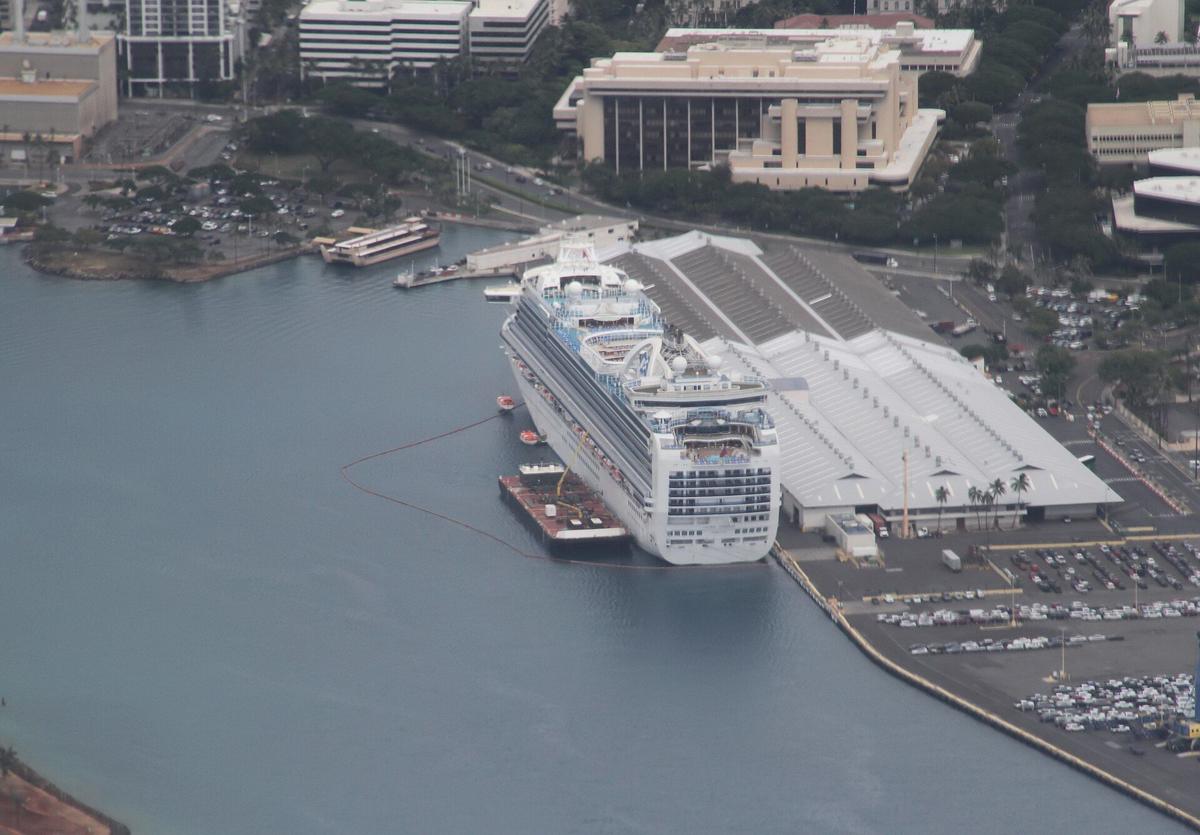
Every Hawaii cruise guide has to explain a fork in the road, because there are exactly two ways to cruise Hawaii and they share almost nothing. The first is the inter-island cruise: fly to Honolulu, board Norwegian Cruise Line's Pride of America, and spend a week moving between the Hawaiian islands, in port every day. The second is the mainland round-trip: board a ship on the US West Coast, spend several days at sea crossing the Pacific, tour the islands, then spend several more days sailing back. One is a Hawaii holiday with a ship in it. The other is an ocean voyage with Hawaii in the middle. Neither is a compromise version of the other, and the reason both exist — and why the first is offered by only one ship — is a piece of US maritime law from the nineteenth century. This guide explains both patterns and the law, factually, so the choice can be made on the traveller's real priority: time in Hawaii, or the sailing itself. The sailings are listed on the Hawaii destinations page.
Hawaii cruise guide: the two patterns at a glance
| Inter-island from Honolulu | Mainland round-trip | |
|---|---|---|
| Ship | Pride of America (Norwegian Cruise Line) | Various lines' foreign-flagged ships |
| Embarkation | Honolulu | West Coast ports such as Los Angeles, San Francisco, San Diego, Vancouver on some programmes |
| Shape | Round-trip from Honolulu, ports in Hawaii only | Round-trip to the islands and back across the Pacific |
| Time at sea | No sea days on the signature itinerary; port every day, with overnights | Several consecutive sea days in each direction |
| Foreign port call | None required | Yes — the itinerary is built to include one (see the law below) |
| Traveller it suits | Hawaii-first travellers; limited holiday time | Sea-day travellers; those avoiding extra flights or adding Hawaii to a longer voyage |
As Norwegian Cruise Line's own Hawaii pages describe the inter-island pattern, Pride of America's signature sailing is a 7-day itinerary from Honolulu visiting four islands and five ports, with overnights in Maui and Kauai, in port every day. That structure — a floating hotel that moves at night and docks every morning — is only possible because of the ship's flag, which brings this Hawaii cruise guide to the law.
Why US law shapes Hawaii cruise patterns: the Passenger Vessel Services Act
The Passenger Vessel Services Act of 1886 (the PVSA, now carried in US law at 46 U.S.C. § 55103) is the passenger counterpart of the better-known Jones Act rules for cargo, which the US Maritime Administration summarises on its domestic shipping pages. In general terms — and this is general information about how itineraries are structured, not legal advice — the Act reserves the carriage of passengers between US ports to coastwise-qualified vessels: broadly, ships that are US-flagged and meet the Act's US ownership and documentation requirements. A foreign-flagged ship, which describes almost every large cruise ship in the world apart from Pride of America, may not simply transport passengers from one US port to another.
The two workarounds built into itineraries
Cruise itineraries are built around that rule in two standard ways. A foreign-flagged ship may sail a closed loop — beginning and ending at the same US port — provided the voyage includes a call at a foreign port; this is why mainland Hawaii round-trips are routed by way of a foreign call, commonly Ensenada in Mexico on Pacific itineraries. And a foreign-flagged ship may carry passengers between two different US ports only if the voyage includes a call at a distant foreign port, a defined term that excludes nearby foreign ports such as those in Mexico, Canada, Bermuda and most of the Caribbean — which is why one-way Hawaii-related sailings on foreign-flagged ships are rare and are usually folded into longer voyages, such as the repositioning-style sailings covered in the repositioning cruises explained guide.
The one ship that needs no workaround
Pride of America sits outside those workarounds because she does not need one. She is US-flagged — Norwegian describes her as the only US-flagged cruise ship sailing the inter-island route — so she can board passengers in Honolulu, call only at Hawaiian ports and return to Honolulu, entirely within US waters, with no foreign call consuming a day of the itinerary. That single fact explains the whole structure of the Hawaii market: one ship doing the port-intensive pattern, everyone else doing the ocean-crossing pattern.
The mainland round-trip, judged on its own merits
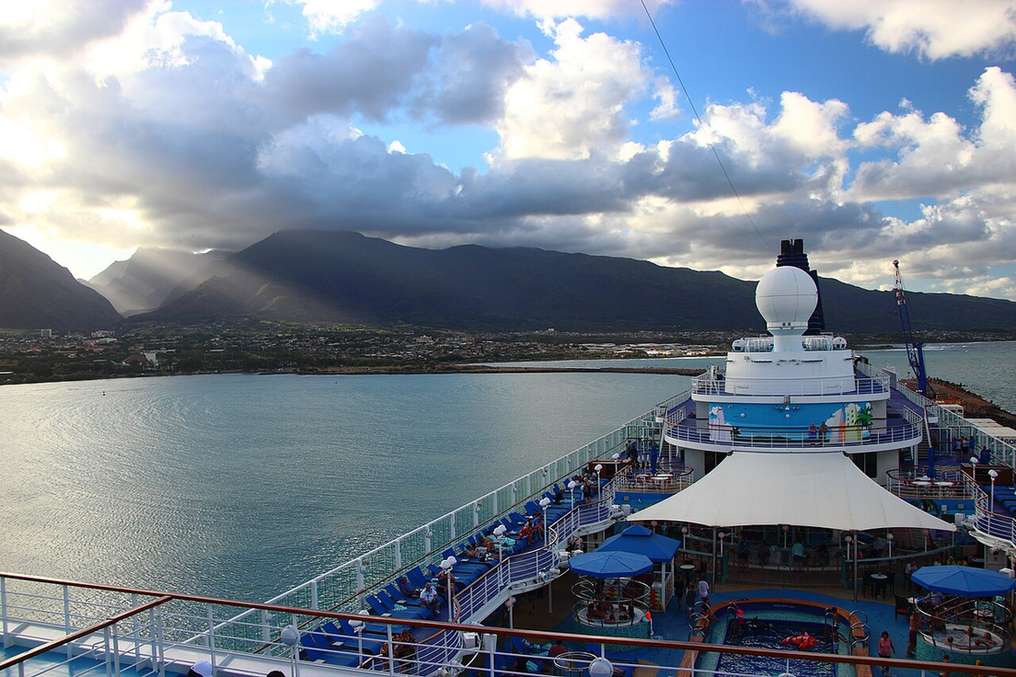
The mainland pattern should not be read as the inferior default. A round-trip from the West Coast turns the Pacific crossing into part of the holiday: several consecutive sea days outbound, a run of Hawaiian port days in the middle — typically spread across the same islands the inter-island cruise visits — and the crossing home. Total itineraries are long by cruise standards, well beyond a week, and the proportion of the trip spent in Hawaii is correspondingly smaller. For travellers who love sea days, who are sailing from a drive-to or short-flight port, or who simply want one ticket and no Honolulu flight, that trade is the point. The honest test is arithmetic, not marketing: count the Hawaiian port days and the sea days on the specific itinerary, and decide whether that ratio is the holiday you want. Travellers combining Hawaii with the other great US-flagged-law-shaped region should also read the Alaska cruise guide, where the same Act explains the Canadian calls on Seattle round-trips.
Which pattern fits your trip
Choose the inter-island cruise if your priority is Hawaii itself: the most port time, overnights that allow evening time ashore, and a one-week footprint that leaves room for a Honolulu stay at either end. Choose the mainland round-trip if your priority includes the voyage: sea days you will genuinely enjoy, a single embarkation nearer home, and a longer, slower trip. The mistake to avoid is booking the mainland pattern while expecting the inter-island pattern's port density, or booking the inter-island pattern while resenting the flight to Honolulu that makes it possible.
Frequently asked questions
Why does only one ship sail between the Hawaiian islands?
Because the Passenger Vessel Services Act reserves passenger carriage between US ports to coastwise-qualified, US-flagged vessels, and Pride of America is the US-flagged ship Norwegian Cruise Line operates on the route. Foreign-flagged ships must build their Hawaii itineraries around a foreign port call instead.
Why does a mainland Hawaii cruise stop in Mexico or another foreign port?
Because a foreign-flagged ship sailing a closed loop from a US port must include a foreign port call to comply with the PVSA. On West Coast Hawaii round-trips that call is commonly in Mexico; it is a legal feature of the itinerary, not a marketing bonus.
How many sea days does a mainland Hawaii round-trip have?
Several consecutive days in each direction — the Pacific crossing is the defining feature of the pattern. Count the sea days on the specific itinerary before booking; lines and departure ports vary, and the total trip length runs well beyond a week.
Is the inter-island cruise in port every day?
On Pride of America's signature 7-day itinerary, yes, as Norwegian publishes it: four islands, five ports and two overnights, with no sea days. The time belongs to Hawaii rather than to the crossing, which is the entire argument for the pattern.
Conclusion: the Hawaii cruise guide decision
A Hawaii cruise guide that respects the reader ends with a ratio, not a recommendation: port days in Hawaii against days at sea, on the specific itinerary under consideration. The Passenger Vessel Services Act guarantees that the two patterns will stay structurally different, so the choice is stable — inter-island for Hawaii itself, mainland round-trip for the voyage as well. Count the days on the sailings listed on the destinations page, and the right pattern usually selects itself. Count the ratio first and thehawaii cruise tips fall into place — port days against sea days, on the itinerary in front of you, not on a brochure's promise.
Sources consulted for this guide: Norwegian Cruise Line's Hawaii cruise pages and the US Maritime Administration's domestic shipping pages. The PVSA summary is general information, not legal advice.
See the deals, total price first
Every deal we list will show the total — fare, taxes and port fees included — before you pay. That is the rule the deals page is being built to.
Browse cruise dealsNever overpay after you book
Once sign-ups open at launch, our price-drop alerts will watch the sailing you care about and flag it when the fare moves.
About price-drop alerts

Search cruises
Every result shows the total for your cabin — taxes and port fees included.