Mexican Riviera Cruise Guide: The West Coast Week, Explained
The classic Mexican Riviera week sails round-trip from Los Angeles (San Pedro) or Long Beach, calling at Cabo San Lucas, Mazatlán and Puerto Vallarta, with sea days built around the distances. The mexican riviera cruise tips that matter most are about heat, tender timing and port-day pacing, and the notes below apply them separately to Cabo, Mazatlan and Puerto Vallarta.
This Mexican Riviera cruise guide explains the Pacific coast's standard week: the run down Mexico's west coast from Southern California homeports to Cabo San Lucas, Mazatlán and Puerto Vallarta, with Ensenada appearing on the short sailings. It is the West Coast counterpart to the Caribbean loops, and for travellers west of the Rockies it replaces a cross-country flight to Florida with a drive or short hop to the port. This guide covers the loop's shape, its port days, its two season systems, and the safety question, answered factually from US State Department advisories. The sailings themselves are on the destinations page.
How the loop in this Mexican Riviera cruise guide is built
A Mexican Riviera cruise guide should begin with distance, because distance writes this itinerary. From the Los Angeles area, a ship needs a sea day or an overnight run to reach Cabo San Lucas at the tip of the Baja peninsula; the ports then step down the mainland coast — Mazatlán, then Puerto Vallarta — before the long run home: sea day, three port days, sea day back. Shorter sailings of three or four nights trim the circuit to Ensenada and sometimes Cabo — a long weekend at sea, not a compressed version of the full week.
Homeports are concentrated in Southern California. The Port of Los Angeles, at San Pedro's World Cruise Center, and the nearby Long Beach terminal used by Carnival Cruise Line handle most departures; San Diego hosts seasonal programmes. The Los Angeles cruise port guide untangles the San Pedro and Long Beach terminals, which are separate facilities in separate cities despite sharing a harbour area.
The ports in this Mexican Riviera cruise guide
Cabo San Lucas
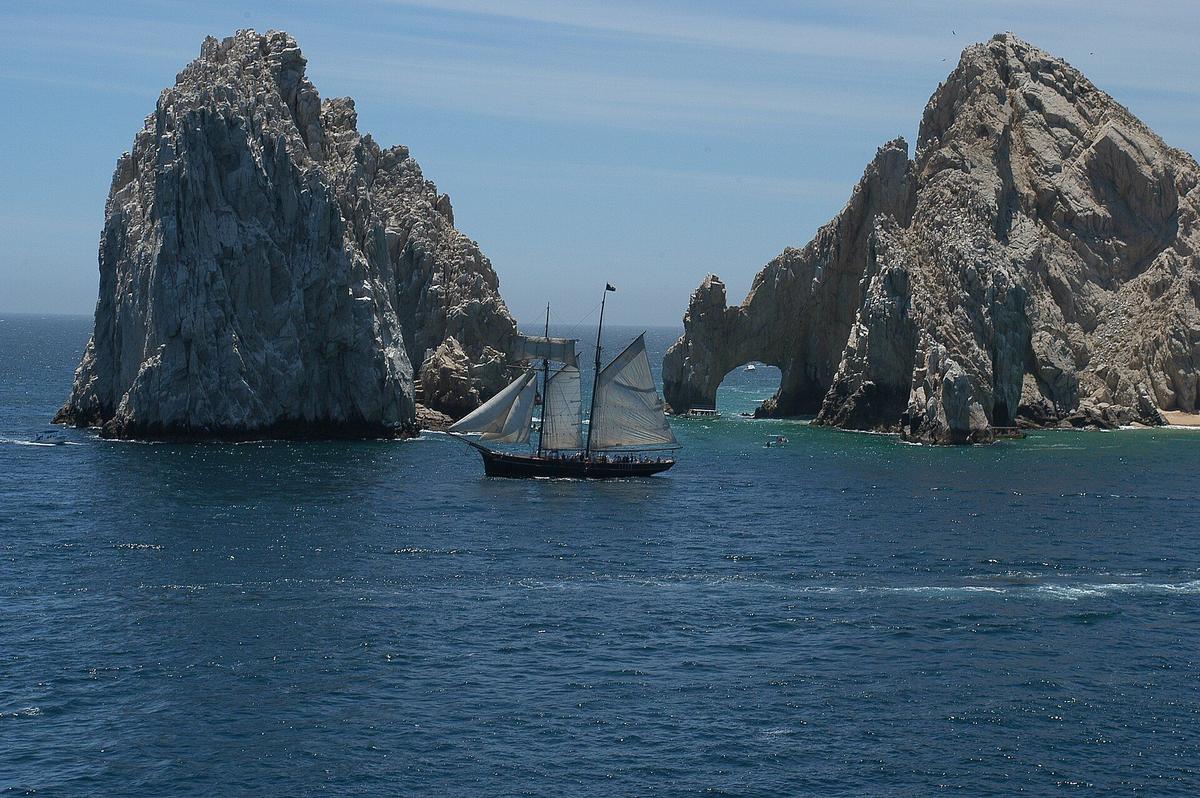
Cabo San Lucas, at the southern tip of Baja California Sur, is the loop's signature call and its tender port: ships anchor in the bay and passengers come ashore by tender to the marina. The landmark is El Arco, the natural rock arch at Land's End where the Pacific meets the Sea of Cortez, reached by boat tour or water taxi, with a sea lion colony on the rocks nearby. The town is a resort centre built around the marina and Médano Beach, the swimmable beach running from the marina toward the hotel zone; not every Cabo beach is swimmable — Pacific-side beaches can have strong surf and currents — so the beach choice matters here. Whale-watching is a headline excursion in winter,. Cabo is frequently the shortest call of the week — read the hours in port before planning around a long excursion.
Mazatlán
Mazatlán, in the state of Sinaloa, is the working port city of the three. Ships berth a short ride from the historic centre. Mazatlán's distinct asset is its old town — the restored nineteenth-century Centro Histórico around the Plaza Machado, the Ángela Peralta theatre and the cathedral — together with one of Mexico's longest malecón waterfront promenades, running from the old town toward the Zona Dorada hotel strip and its beaches.
Puerto Vallarta
Puerto Vallarta, in the state of Jalisco on the Bahía de Banderas (Banderas Bay), is generally the fullest day of the loop, and ships often stay into the evening. Ships berth at the maritime terminal under ASIPONA Puerto Vallarta, across from the hotel zone and a short ride from the centre. The town retains a genuine centre beyond the resorts: the malecón boardwalk, the Church of Our Lady of Guadalupe, and the Zona Romántica's restaurants and cafés south of the Cuale River. The bay is the other half of the day — a large, mountain-backed natural harbour where excursion boats run to beach villages such as Yelapa, reachable only by water, and where in winter the bay is one of Mexico's best-known whale-watching areas, with humpback whales present in the season.
| Port | Country / territory | Known for |
|---|---|---|
| Cabo San Lucas, Baja California Sur | Mexico | Tender port, El Arco at Land's End, Médano Beach, winter whale watching |
| Mazatlán, Sinaloa | Mexico | Historic centre and theatre, long malecón, Stone Island beach day |
| Puerto Vallarta, Jalisco | Mexico | Malecón and old town, Banderas Bay excursions, long port stays |
| Ensenada, Baja California | Mexico | Short-sailing call, wine country excursions to Valle de Guadalupe |
Seasons: hurricanes, whales and the shape of the year
Two calendars govern this coast, and a Mexican Riviera cruise guide should keep them separate. The first is weather risk. NOAA's National Hurricane Center dates the eastern Pacific hurricane season from May 15 to November 30, with most activity between late June and early October; systems in this basin typically form off Mexico's southern coast and track roughly parallel to the Riviera coast, which is why itineraries here can be adjusted around weather in the peak months. That is probability, not a forecast for any given sailing.
The second calendar is wildlife. Humpback whales migrate to the warm waters around Cabo San Lucas and into Banderas Bay for the winter breeding season, broadly the northern winter months, which is why whale-watching is a headline excursion at two of the three ports in that part of the year and largely absent from the summer programme. Summer sailings remain popular with families travelling in school holidays and offer the warmest sea temperatures; they carry the humidity of the mainland rainy season and the hurricane-season considerations above. None of this produces a single correct month. It produces a trade: winter for whales and settled weather, summer for school calendars and warm seas.
Safety, stated factually
Safety content for Mexico requires a specific discipline, which this guide follows: use the official source and neither inflate nor minimise it. The US Department of State publishes travel advisories for Mexico at state level rather than as a single countrywide rating. The three main ports in this guide sit in three different states — Baja California Sur (Cabo San Lucas), Sinaloa (Mazatlán) and Jalisco (Puerto Vallarta) — and the State Department's advisory assigns each state its own level and, in some cases, specific guidance for particular areas within a state. Those levels are reviewed and can change, so the correct pre-sailing step is to read the current Mexico advisory on the State Department's travel site for each state on your itinerary, shortly before you travel,.
Two structural points are fair to add, because the lines' own behaviour demonstrates them. First, cruise lines continuously assess port calls against official guidance and do alter itineraries — dropping or substituting a call — when assessments change, which is why a published itinerary is a plan rather than a guarantee. Second, port days concentrate in established visitor areas, and standard travel practice applies: stay aware of your surroundings, use licensed taxis or booked transport, and follow your line's guidance. Travellers comparing this loop with its Caribbean-side counterpart will find the same sourced approach in the western Caribbean cruise guide.
Line choices on the Riviera
The Mexican Riviera is served by a smaller, more concentrated set of lines than the Caribbean, reflecting its single-homeport geography. Carnival Cruise Line is the year-round anchor tenant from Long Beach; Princess Cruises, Holland America Line, Norwegian Cruise Line and Royal Caribbean International run Los Angeles and San Diego programmes across much of the year, with additional lines appearing seasonally. Ship age and style vary more on this coast than in the Caribbean fleet, because lines deploy a mix of newer vessels and well-kept older ships here — which makes reading the specific ship, not just the line and itinerary, an unusually important step on this loop.
Frequently asked questions
Where do Mexican Riviera cruises leave from?
Primarily the Los Angeles area: the Port of Los Angeles's World Cruise Center at San Pedro, and the Long Beach cruise terminal used by Carnival, with San Diego hosting seasonal sailings. The two Los Angeles-area terminals are in different cities, so confirm which one your sailing uses.
Why is Cabo San Lucas a tender port?
Ships anchor in the bay off Cabo San Lucas rather than berthing alongside, and passengers travel ashore by tender boat to the marina. Allow extra time at both ends of the call — Cabo is often the shortest port day of the week — and note that tender operations can be affected by sea conditions. Mazatlán and Puerto Vallarta, by contrast, are alongside berths where passengers walk off the ship.
When is whale season on the Mexican Riviera?
Humpback whales are present around Cabo San Lucas and in Banderas Bay (Puerto Vallarta) during the northern winter breeding season, broadly the winter months, and whale-watching excursions operate at both ports in that period. If a whale-watching day is a priority, plan the sailing for the winter part of the calendar.
Is a Mexican Riviera cruise safe?
The authoritative answer is the current one: the US State Department publishes its Mexico advisory by state, and Cabo San Lucas (Baja California Sur), Mazatlán (Sinaloa) and Puerto Vallarta (Jalisco) are assessed separately, with levels and area-specific guidance that can change. Read the current advisory for each state on your itinerary before sailing, stay in the established visitor areas where port days are concentrated, and expect your line to adjust the itinerary if official assessments change.
Conclusion
A Mexican Riviera cruise guide should leave the loop legible: one circuit, three distinct port days — Cabo's arch and tendered anchorage, Mazatlán's historic working city, Puerto Vallarta's long day on Banderas Bay — wrapped in sea days and governed by two calendars, hurricane season and whale season. Add a current read of the State Department's state-level advisories, and there is nothing left to guess about. Browse the sailings on the destinations page with those facts in hand, and this Mexican Riviera cruise guide has done its work.
Sources
- Port of Los Angeles — cruise pages
- US Department of State — travel advisories
- NOAA National Hurricane Center — climatology
This Mexican Riviera cruise guide works best beside the lines' current itineraries, which shift by season. Themexican riviera cruise tips in this guide hold across seasons; the itineraries beside them shift — check the sailing, then trust the method.
See the deals, total price first
Every deal we list will show the total — fare, taxes and port fees included — before you pay. That is the rule the deals page is being built to.
Browse cruise dealsNever overpay after you book
Once sign-ups open at launch, our price-drop alerts will watch the sailing you care about and flag it when the fare moves.
About price-drop alerts
Search cruises
Every result shows the total for your cabin — taxes and port fees included.