San Juan Cruise Port Guide: Old San Juan Piers and Fly-In Timing
The operator, San Juan Cruise Port, describes two areas: the Old San Juan District (Piers 1, 3 and 4), mainly for transit calls and luxury ships, and the Homeport District, including the Pan American Piers, for cruises starting and ending here.
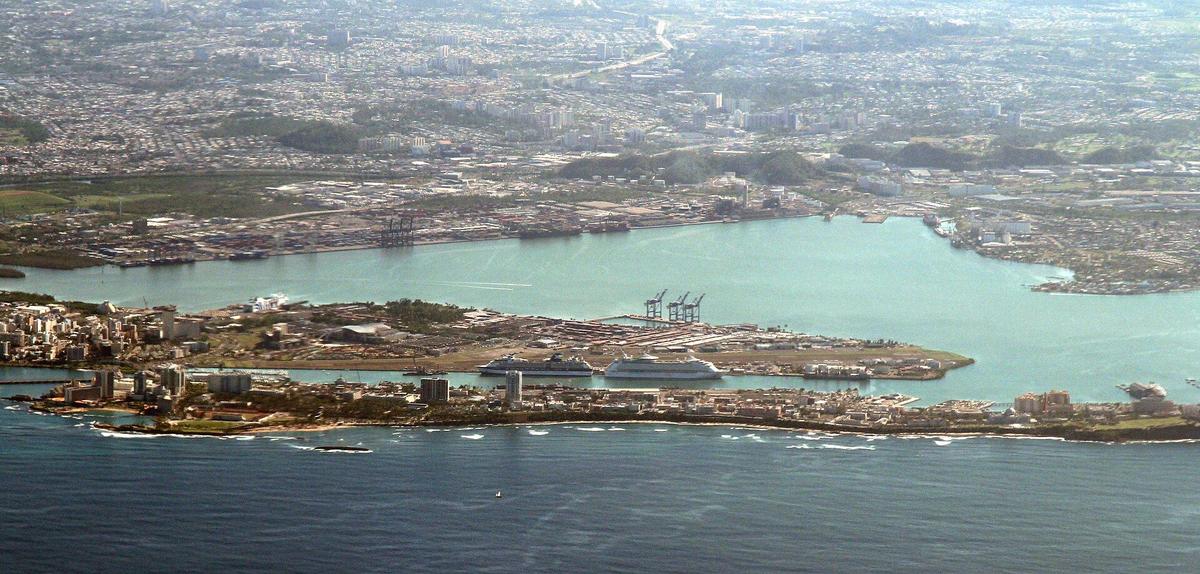
This san juan cruise port guide begins with a distinction that decides the whole day: San Juan is really two ports wearing one name. The Old San Juan piers sit against the historic district, where a ship is part of the old town's waterfront. The Pan American Pier sits across the water in Isla Grande, built for the business of starting and ending cruises. A passenger can be visiting San Juan for the day, starting a cruise there, or ending one there — and each of those days runs through a different pier, with different transfers, timing and luggage logic. Knowing which San Juan you are using is the entire game.
San juan cruise port guide: two pier areas, two different days
San Juan Cruise Port — the operator working in public-private partnership with the Puerto Rico Ports Authority — sets out the structure in its own long-term plan: two distinct cruise port areas, the Old San Juan District including Piers 1, 3 and 4, mainly dedicated to transit calls and luxury ships, and the Homeport District including the Pan American piers and Piers 11–13. That official framing is the cleanest way to understand the port. Transit calls — ships visiting for the day — belong mainly to the old town waterfront. Homeport operations — passengers, luggage, provisioning and turnaround at scale — belong mainly across the bay.
The Old San Juan piers in detail
The Old San Juan experience is the famous one. The operator gives the address for Piers 3–4 as Calle Marina, Old San Juan: step off the ship and the historic district is the immediate surroundings, with its forts, plazas and blue-cobblestone streets reached on foot. A transit day here needs no transfer planning at all, which is precisely why these piers suit port-of-call traffic. The Pan American experience is functional rather than picturesque: a turnaround terminal in Isla Grande, at Calle Muelle per the operator, designed for check-in halls, baggage at volume and road access. Nobody walks from the Pan American Pier into the old town as a casual stroll; the connection is a taxi, rideshare or line transfer, using the designated pick-up and drop-off areas the operator provides outside its terminals.
This guide deliberately assigns no cruise line to a fixed pier. Assignments in San Juan vary with ship size, line and the day's berth plan, and they change — the honest instruction is the operator's own implicit one: read the pier named in your cruise documents, and navigate to that address. The two-area structure, by contrast, is stable, and planning around the structure — old town walk-off versus Isla Grande transfer — is planning that survives any individual assignment.
| Pier area | Operator's address | Main role, per San Juan Cruise Port | Passenger experience |
|---|---|---|---|
| Old San Juan piers (1, 3 and 4) | Piers 3–4: Calle Marina, Old San Juan, PR 00901 | Mainly transit calls and luxury ships | Walk straight into the historic district |
| Pan American Piers I & II | Calle Muelle, Isla Grande, San Juan, PR 00907 | Homeport District — cruises starting and ending in San Juan | Turnaround terminal; taxi, rideshare or transfer to the old town and airport |
Why southern Caribbean cruises start here, in this san juan cruise port guide

San Juan's homeport role is a matter of geography and status, and both halves matter. Geographically, it sits at the eastern edge of the Greater Antilles, a full step closer to the southern Caribbean than any Florida port: a sailing from San Juan reaches the deep southern islands — the Aruba, Bonaire and Curaçao runs and the Lesser Antilles chains — without spending its first and last days on long sea transits from the mainland. That is why the southern Caribbean cruise guide treats San Juan as the region's natural front door, while the eastern Caribbean cruise guide shows the shorter loops that also call here in transit.
The status half: a US homeport in the Caribbean
Status is the second half. Puerto Rico is a United States territory, and the operator states the practical consequence directly: entry requirements are the same as travelling to any part of the United States. For US travellers, the fly-cruise connection is a domestic-style flight to Luis Muñoz Marín International Airport (SJU) feeding an international-feeling itinerary — no separate foreign entry process at the start of the trip, and a US airport at the end of it. Travellers from outside the United States should read that sentence the other way: San Juan is entered under United States rules, and the documentation for entering the US is the documentation this port requires. Either way, the check belongs at booking time, not at the airport.
The homeport pattern that follows is distinctive. San Juan turnarounds often run later in the day than mainland departures, and the port city rewards an early arrival: a pre-cruise night in the old town or the Condado or Isla Verde strips converts embarkation day from a travel day into a holiday day. That pattern only works if the fly-in is planned as part of the cruise rather than as a commute to it.
Flying into SJU for a San Juan cruise: transfers and bags
SJU is the single gateway, and the journey from it divides by pier. To the Old San Juan piers, the transfer crosses into the historic district. To the Pan American Pier in Isla Grande, the transfer is shorter in spirit — the pier sits on the airport side of the bay — but it is still a road journey to be booked or hailed, not a walk. In both cases the operator's guidance is structural: designated pick-up and drop-off areas outside the terminals serve taxis, rideshares and local transport. Use those areas and official or line-arranged transport, and keep the transfer inside the plan rather than improvising it at the kerb with luggage.
Parking resolves itself quickly: the operator states plainly on its official site that there is no guest parking within San Juan Cruise Port, with public and private lots in the surrounding area serving the small number who drive. Treat that as the port telling you what it is — a fly-cruise homeport for an island. Nobody sensible builds a San Juan embarkation around a car.
Timing the fly-in day
Timing is where San Juan trips are won and lost. Fly in the day before if the sailing matters — the island flight is the single point of failure in the whole itinerary, and a missed homeport departure means meeting the ship at a foreign port of call, with the passport questions that raises. On the way home, the mirror rule applies: SJU on a turnaround morning absorbs a ship's worth of passengers heading for the same flights, so a late-morning or afternoon departure is a calmer bet than the first flight out.
Baggage, split by passenger type
Baggage follows the pier split. Transit passengers barely think about bags. Homeport passengers should think about the gap between a morning hotel check-out and an afternoon check-in window — the same gap as any fly-cruise port, solved the same way: hotel storage after check-out where offered, or a timed transfer that makes the terminal the last stop. On disembarkation, a late flight plus that same storage logic turns the final day in the old town from a burden into a bonus.
Frequently asked questions
What is the difference between the Old San Juan piers and the Pan American Pier?
Role and location. Per the operator, the Old San Juan District — Piers 1, 3 and 4, on Calle Marina against the historic district — is mainly for transit calls and luxury ships, and passengers walk straight into the old town. The Pan American Piers I & II, at Calle Muelle in Isla Grande, anchor the Homeport District for cruises that start and end in San Juan, and need a road transfer to reach the old town.
Which pier will my cruise use in San Juan?
The one named in your cruise documents. This guide states no fixed line-to-pier assignments because San Juan's assignments vary by ship size, line and sailing and change over time. The reliable preparation is structural: know whether your pier is in Old San Juan or at the Pan American Pier, and plan the transfer for that area.
Is there parking at San Juan Cruise Port?
No guest parking within the port itself, per the operator, San Juan Cruise Port. Public and private parking exists in the surrounding area, but San Juan is fundamentally a fly-cruise port: the standard plan is a flight into SJU and a taxi, rideshare or line transfer to the pier.
Do I need a passport to cruise from San Juan?
Puerto Rico is a US territory, and the operator states that entry requirements are the same as travelling to any part of the United States. What you need beyond that depends on your citizenship and your itinerary's ports of call — a closed-loop question your cruise line's document guidance answers for your specific sailing. Check it at booking, especially because flying to meet a missed ship abroad is a different document situation from boarding in San Juan.
Conclusion: this san juan cruise port guide in two addresses
Everything in this san juan cruise port guide hangs on two addresses: Calle Marina in the old town, where San Juan is a walk-off port of call, and Calle Muelle in Isla Grande, where it is a fly-cruise homeport built for turnarounds. Identify which one your sailing uses, fly in with a day to spare, and the southern Caribbean opens from the most convenient door it has. To place San Juan among all the departure choices — and to see which ports serve which seas — compare it on the ports hub at MyCruiseDiscount.com before the sailing is chosen, not after.
See the deals, total price first
Every deal we list will show the total — fare, taxes and port fees included — before you pay. That is the rule the deals page is being built to.
Browse cruise dealsNever overpay after you book
Once sign-ups open at launch, our price-drop alerts will watch the sailing you care about and flag it when the fare moves.
About price-drop alerts

Search cruises
Every result shows the total for your cabin — taxes and port fees included.