Black Friday Cruise Deals Explained: What the November Sales Change
November's cruise sales are wave season in a louder coat. This post compares the sale mechanics - deposits, credits, bundles - against the January baseline, so the 'deal' can be judged cold. Read that way, Black Friday cruise sales become a set of components to price, not a banner to believe.

Late November brings cruising's loudest typography: a short window of banners promising the year's biggest savings. Black Friday cruise deals are real sales in the sense that real terms change — deposits drop, credits appear, bundles are assembled — but they are assembled from the same components the lines sell all year, and the honest question is never "is there a sale?" but "which components actually moved, and what did they cost?" This guide judges the November sales the way it judges wave season cruise deals explained — January's quieter baseline — and cruise percent off deals explained: by itemising the stack and pricing the total, never by repeating the banner's percentages as fact. The 2026 form of the search — black Friday cruise deals 2026 — is the one to use while the window is open, and the same cold comparison applies: the sailing's total in November against its total in January.
Black Friday cruise deals: the stack, itemised
What actually moves in November
Strip the season's offers down and four components recur. Reduced deposits: entry sums fall to their floor for the window, on the usual non-refundable terms. Onboard credit: modest per-stateroom amounts attach to selected sailings — Carnival's current published specials terms this season (checked October 2026) show the scale honestly, with offer credit itemised per person up to fixed per-stateroom caps and deposits itemised from $25 to $149 per person by sailing length (per Carnival's specials terms). Bundles: drinks, Wi-Fi or gratuities folded into a named fare at a combined price that must be unbundled to be judged. And category upgrades or room-location sweeteners, capacity-controlled and ship-specific. Every one of these is a real lever. None of them is a percentage off the cruise in any simple sense — which is why the component list, not the banner, is where a November offer becomes legible. Royal Caribbean's November sale is the line most shoppers ask about by name, and royal Caribbean Black Friday cruise deals track the same four components — reduced deposits, onboard credit and bundles — with the fare-setting machinery untouched.
The baseline problem
A sale is a comparison, and cruise comparisons have a known defect: the "was" price. Fares are repriced continuously against demand, so the former price in a November banner may be a fare that existed briefly, on some categories, weeks earlier. This is not a loophole in advertising law; the law speaks to it directly. The FTC's Guides Against Deceptive Pricing hold that a former-price comparison is legitimate only where the former price is "the actual, bona fide price at which the article was offered to the public on a regular basis for a reasonably substantial period of time" — and that an inflated price set up to enable a large reduction makes the bargain "a false one." The referee's translation for cruisers: a percentage against an unverifiable anchor is marketing, and the only comparison that means anything is your sailing's total fare, in the same cabin category, at two real moments in time.
Judging November cruise deals against January
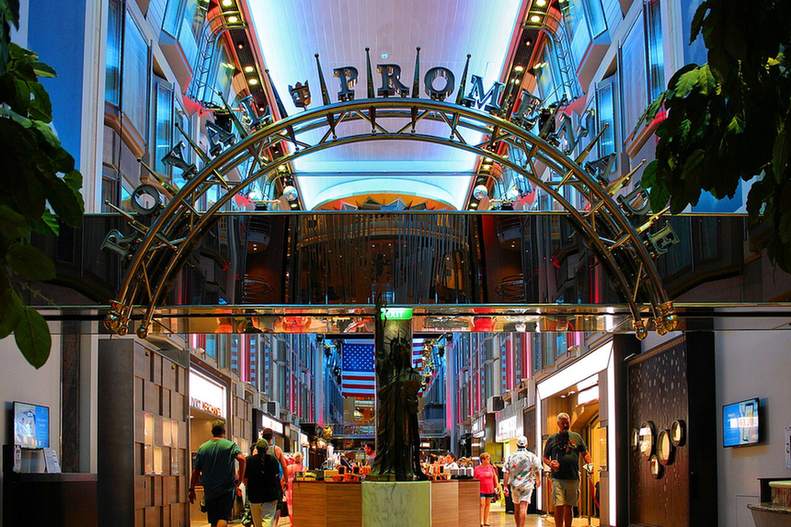
Same stack, different coat — mostly
Wave season, January to March, is the industry's traditional promotional peak: lines compete for the year's bookings with the same four components. November's sales differ in packaging more than in substance — a compressed window, a retail-calendar halo, and a buyer pool primed by every other store's sale. There are two genuine November distinctions. First, timing: a November booking locks a sailing before wave season's widest choice, which matters for specific ships and school-holiday dates that sell early. Second, stacking order: a November offer taken on a strong fare can beat a January offer taken on a fare that has since firmed. Both distinctions are about the specific sailing, not the season — which is why season-level verdicts ("Black Friday is better") are exactly what this guide refuses to issue.
| Component | What November advertises | What to verify in the terms |
|---|---|---|
| Reduced deposit | A small per-person entry figure | It scales by sailing length, and it is normally non-refundable |
| Onboard credit | A headline per-stateroom amount | The cap, the per-person build-up, and that it cannot pay fare, fees or taxes |
| Bundle | Drinks, Wi-Fi or gratuities "included" | The bundle's price against the cruise-only fare plus the items you would actually buy |
| Percentage off | The banner's largest number | A bona fide former price for your ship, date and category — or it is decoration |
| Booking window | Days, with countdown pressure | The offer's actual book-by dates and the sailings it excludes |
A cold protocol for Black Friday cruise deals
Four checks before the window closes
First, price the total, not the banner: fare, taxes and port fees, gratuities, and the deposit's refund terms, for your exact cabin category, captured in writing. Second, unbundle: price the cruise-only fare beside the bundle and buy only the components you would purchase anyway. Third, use our deals page standard as the comparison habit — the same sailing, the same category, totals side by side — and compare November's number against the fare's recent history where you have it, not against the line's "was." Fourth, respect the deposit arithmetic: a cheap entry on a sailing you are unsure of is a forfeiture waiting for a date, and November's compressed windows are designed to make unsure feel urgent. The sales will return in January wearing a different coat; a cabin on the right sailing at a fair total will not need a costume at all.
Frequently asked questions
Are Black Friday cruise deals genuinely cheaper than wave season?
Sometimes, for some sailings — and unverifiable as a general claim. Both seasons move the same components. The winner for your trip is whichever season prices your ship, date and category lower in total when you check, and that is a per-sailing fact, not a seasonal law.
Why do the advertised percentages look so large?
Because they are measured against a former price — and cruise fares move so constantly that the anchor is hard to audit from outside. FTC guidance requires that anchor to be a bona fide, regularly offered price for the comparison to be legitimate. Judge the total you would pay, and let the percentage go unjudged.
What is actually worth grabbing in the November window?
A reduced deposit on a sailing you have already chosen, onboard credit on a fare that was already competitive, or a bundle whose components you would buy at their separate prices. In each case the sale improves a decision you had made — it does not make the decision for you. The same components decide royal Caribbean Black Friday cruise deals: a reduced deposit on a sailing you have already chosen, or credit on a fare that was already competitive, is worth grabbing — the banner alone is not.
Should I wait for January if I miss the November window?
You lose less than the countdown implies. Wave season follows within weeks with the same promotional machinery, and fares for many sailings are still forming. Missing a November offer on a sailing you had not chosen costs nothing; rushing one costs the deposit.
The bottom line: Black Friday cruise deals are the year-round promo stack in a louder coat — real deposit cuts, real credit, real bundles, and percentages that deserve the FTC's scepticism. Itemise the components from the terms page, price the total cold, and November becomes a useful week to book a cruise you already wanted, rather than a reason to want one. For black Friday cruise deals 2026, the protocol is unchanged: price the total cold, and November becomes a useful week to book a cruise you already wanted. November's Black Friday cruise sales reward the traveller who itemises the components from the terms page instead of believing the banner.
See the deals, total price first
Every deal we list will show the total — fare, taxes and port fees included — before you pay. That is the rule the deals page is being built to.
Browse cruise dealsNever overpay after you book
Once sign-ups open at launch, our price-drop alerts will watch the sailing you care about and flag it when the fare moves.
About price-drop alerts




Search cruises
Every result shows the total for your cabin — taxes and port fees included.