Two Cabins vs One Suite Cruise Bookings: Bathrooms Beat Square Feet
Families price one suite and stop thinking. This comparison runs the alternative - two standard cabins - through beds, bathrooms, privacy and perks, where the cheap answer often wins. A one suite cruise booking concentrates cost in perks and square footage, and the worksheet below compares that total honestly against splitting the party across two doors.

Families run one quote — the suite — and stop, as if sleeping five people required a sitting room. The two cabins vs one suite cruise comparison is the quote they never run, and it changes the answer more often than the suite brochures would like. Two standard cabins give a family two bathrooms, two televisions, two doors that close, and usually a lower total than one suite on the same sailing. The suite gives space in one room, a programme of perks, and everyone in one another's sightlines for a week. Neither answer is automatic. This guide runs both configurations through the things families actually fight about — bathrooms, beds, privacy, price mechanics — so the choice is made on evidence instead of on the first quote.
Two cabins vs one suite cruise: the physical comparison
Bathrooms, beds and doors that close
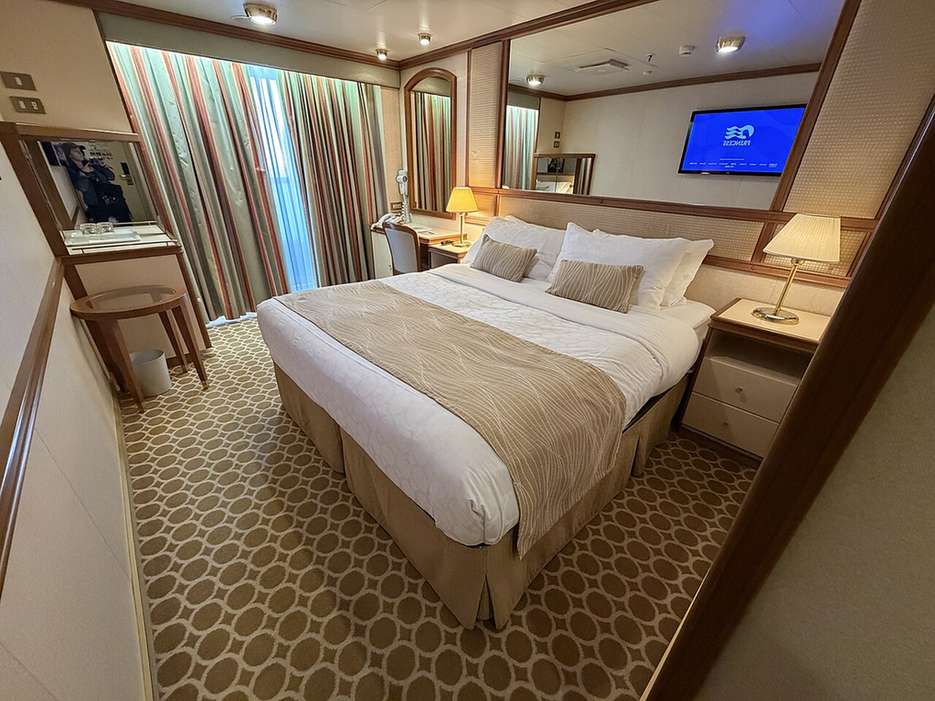
Start with the morning. One suite, however generous, normally means one bathroom queue for showers, teeth and the pre-dinner turnaround, shared by everyone in the booking. Two cabins mean two bathrooms running in parallel, which on a family schedule is worth more than a sofa. Beds divide better too: each cabin gets its own configuration, so the early sleeper and the late reader stop negotiating. The same split runs through the small logistics — two lots of storage, two sets of charging points, two places for the day's bags and laundry to land. Carnival's stateroom guide, checked October 2026, describes its family-friendly staterooms as accommodating up to five with an extra bathroom and connecting doors — the line itself builds family product around the two-room shape. Royal Caribbean's deck plan guide makes the enabling point: deck plans show adjoining staterooms explicitly, so connecting pairs can be identified cabin by cabin before booking rather than requested hopefully afterward. That "adjoining" mark on the plan is the whole ballgame — two cabins that do not connect, or sit doors apart, are a different and weaker product, particularly with younger children.
What the suite gives back
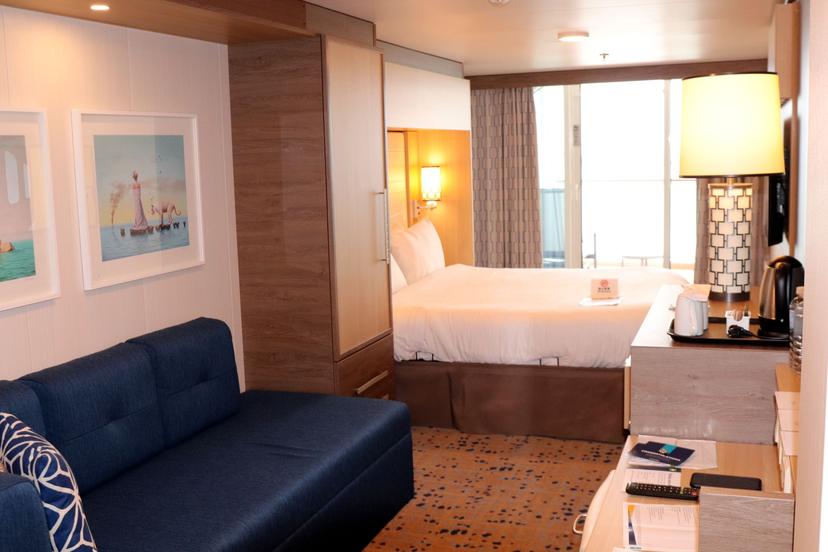
The suite's counter-argument is togetherness plus programme. One room keeps the family in one place, with a living area that functions as a shared base rather than two separate hotel rooms. And a suite fare on many lines carries the programme itemised in are cruise suites worth it: priority boarding, concierge help, and on some programmes access to fenced restaurants and decks. Two standard cabins buy none of that. If the family will use the programme daily — the quiet restaurant, the escorted boarding with tired children — it belongs in the comparison at full weight, not as a footnote. If they will use it twice, it is decoration on the quote.
| The family test | Two standard cabins | One suite |
|---|---|---|
| Bathrooms | Two, running in parallel | Usually one, however large the room |
| Sleeping privacy | Two doors that close; separate bedtimes possible | One shared space; living area converts at night |
| Togetherness | Split across two rooms; connecting door restores most of it | Everyone in one base, all week |
| Programme perks | None beyond the category booked | Priority, concierge and private spaces where the programme provides them |
| Price shape | Two base fares; extra guests priced inside each cabin | One premium fare carrying every guest |
Two cabins vs one suite cruise: the price mechanics
How the totals are actually built
Quote both shapes completely: every guest, taxes and port fees inside, from our ships page. The suite total is one premium fare multiplied across its occupants under that cabin's pricing. The two-cabin total is two base fares, with the additional guests in each cabin priced under the third and fourth guest mechanics decoded in third and fourth guest cruise fares — which is where the second cabin often turns out cheaper than intuition says, because the extra guests in a standard cabin are rarely priced like the first two. Two cautions keep the comparison honest. First, connecting inventory is finite and ship-specific: Royal Caribbean's stateroom overview notes connecting options among its family accommodations, but the deck plan for your ship and date is the only proof a connecting pair exists at the fare you are quoted. Second, supervision rules belong in the maths: lines set minimum ages for occupying a cabin and policies on minors in separate rooms, and those rules — in the line's current terms, not in this article — can dictate the configuration before price gets a vote. A two-cabin quote that breaches the line's occupancy policy is not a saving; it is a booking that fails at the pier.
The verdict pattern
Across mainstream fleets the pattern repeats, without any percentage attached because none can be honestly published: when the family values bathrooms, sleep separation and total price, two cabins usually win; when the family values the suite programme and shared space — a celebration trip, grandparents hosting grandchildren in one base — the suite earns its premium. The families who regret the choice, in either direction, are the ones who priced only one shape. Run both quotes. It takes minutes, and it is the entire content of this post.
Frequently asked questions
Are connecting cabins guaranteed if I book two rooms?
Only if the specific cabins are connecting by design and booked as such. Deck plans mark adjoining staterooms; a request for "rooms near each other" is not the same product. Confirm the connecting pair by cabin number before paying, because availability is per ship and per sailing.
Can children have their own cabin next door?
Lines set their own rules on the ages at which guests may occupy a cabin and on how minors' cabins must relate to an adult's — commonly requiring the cabin to be adjacent or connecting to a responsible adult's. The current terms of the line you book are the authority; check them before building a quote around two rooms.
Is a suite ever cheaper than two cabins?
It can be, on particular sailings — when standard inventory has sold through unevenly or a suite promotion is running, the single premium fare can undercut two base fares. That is exactly why both shapes get quoted with full totals on the same date instead of decided by rule of thumb.
What do we lose by splitting into two cabins?
The suite programme: priority services, concierge, and any private venues attached to suite fares on that line and ship, plus the single shared living space. If those are worth little to your family, the loss is small; if the trip is built around them, it is the decision.
Conclusion: two cabins or one suite, decided
The bottom line: two cabins vs one suite cruise is a comparison families skip and shouldn't. Two bathrooms and two doors against one programme of perks, both priced in full on the same sailing through our ships page — run both quotes, check the connecting marks on the deck plan, and let the family's mornings, not the brochure, decide. Run the one suite cruise quote against two connecting cabins on the same sailing, and let the family's mornings, not the brochure, decide.
See the deals, total price first
Every deal we list will show the total — fare, taxes and port fees included — before you pay. That is the rule the deals page is being built to.
Browse cruise dealsNever overpay after you book
Once sign-ups open at launch, our price-drop alerts will watch the sailing you care about and flag it when the fare moves.
About price-drop alerts


Search cruises
Every result shows the total for your cabin — taxes and port fees included.