Choosing a Cruise Departure Port: Drive, Fly, or Sail From Elsewhere
The fare is not the trip. Flights, hotels and parking attach to the departure port you pick - this framework prices the port decision itself before you compare a single sailing. Choosing a cruise departure port on total trip cost - fare plus flights, hotel and parking - routinely reverses the ranking the headline fare suggests. Get the cruise departure port right and the rest of the booking follows, because flights, hotel and parking all attach to that one choice.
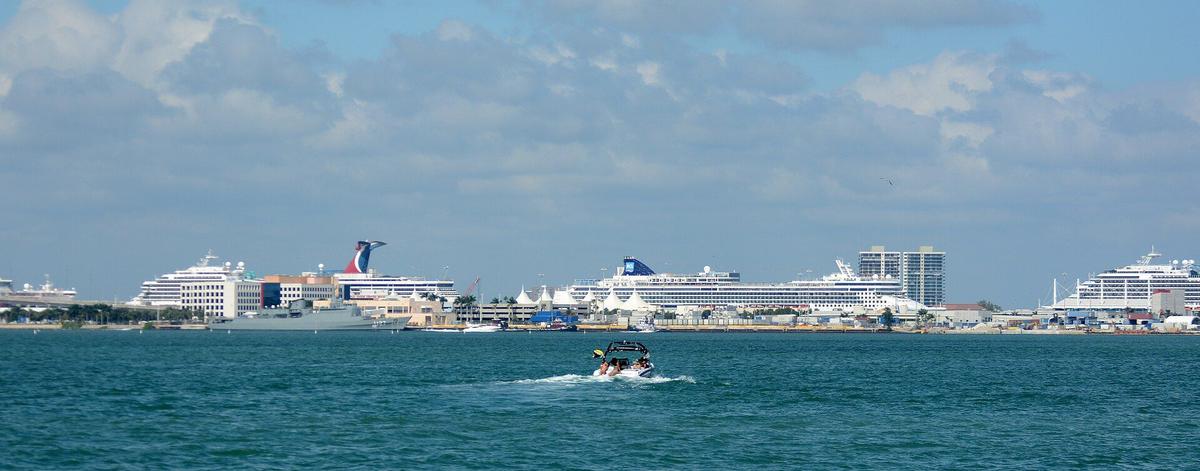
Most cruise shopping starts with the fare, and that is the first mistake. Choosing a cruise departure port is a decision you make before any sailing is compared, and it quietly sets the trip's real cost: the flights or the fuel, the hotel night, the parking, the transfers, and the amount of stress packed into embarkation day. Two travellers can book the same ship, the same cabin and the same week and still end up hundreds apart in total spend — purely because one drove forty minutes to the pier and the other flew across the country to reach it. This guide treats the departure port as what it is: the first line of the budget, not a detail to settle after booking.
Choosing a cruise departure port: the total-trip ledger
What attaches to the port, line by line
Start by listing everything the port decision drags with it. For a fly-to port: return flights for every traveller, baggage charges where they apply, airport parking or transport at home, transfers or taxis at the other end, and — for almost everyone who takes the standard advice — a hotel room the night before sailing, because flying in on embarkation morning is a gamble against airline delays. For a drive-to port: fuel and tolls, port parking for the length of the cruise, and possibly the same hotel night if the drive is long enough to be miserable before noon. Neither list is automatically cheaper. The honest comparison is the sum of one list against the sum of the other, for your party size, on your dates — a family of four flying pays four airfares, while a couple driving pays for one car however many bags it swallows. That arithmetic, done before you fall in love with a sailing, is the whole discipline behind our ports hub, where each homeport's own guide carries its local facts.
The embarkation-day risk is a cost too
Money is only half the ledger. A departure port you fly to inserts an airline's reliability into your cruise: a cancelled morning flight can end the holiday before it starts, which is why the near-universal advice is to arrive the day before — converting risk into a hotel bill. Driving carries its own failure modes, traffic and weather, but they degrade gracefully: leave earlier and the problem usually shrinks. None of this argues that one mode always wins. It argues that the port choice should be made with both columns — cash and fragility — written down, not discovered.
What the port gives you: ships, itineraries and terminal reality
Homeports are not interchangeable
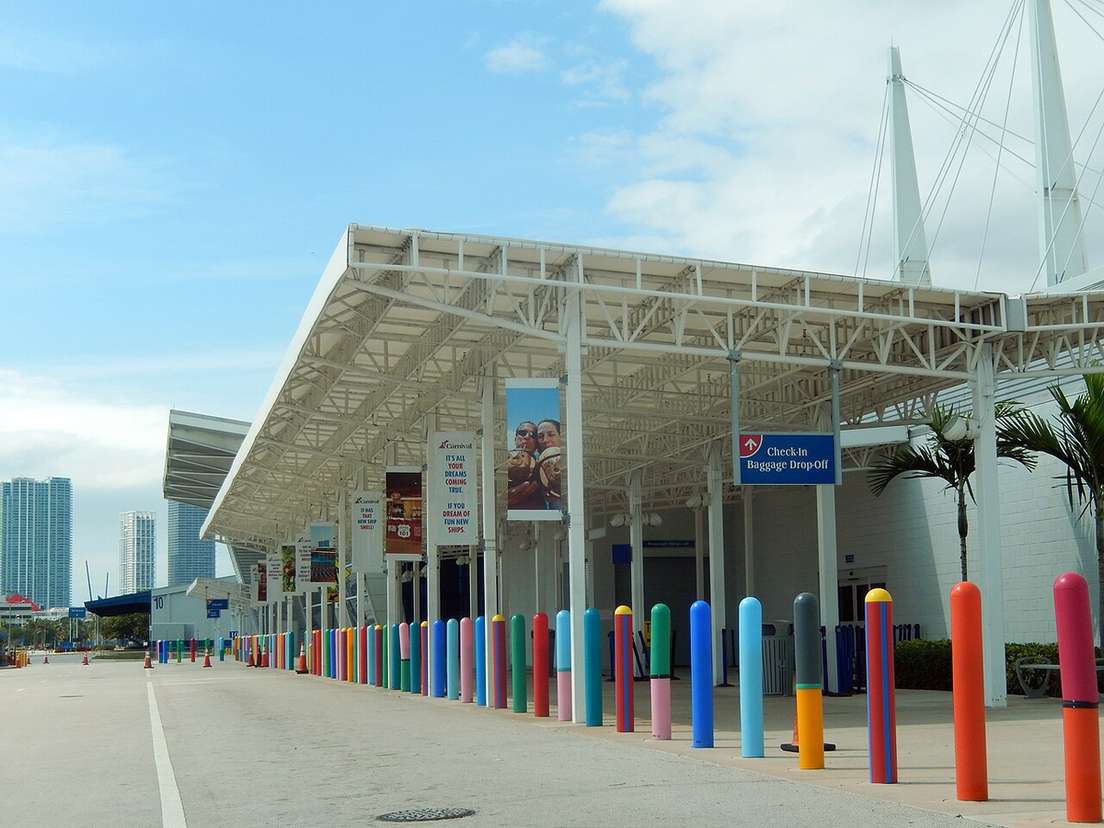
A departure port is also a filter on the product itself. Each homeport hosts a particular set of ships and a particular menu of itineraries: the big Florida ports field the largest and newest ships on Caribbean loops, while regional ports offer fewer hulls, older tonnage or narrower routes. PortMiami's own terminal pages, for example, list dedicated branded terminals for several major lines side by side (PortMiami cruise terminals, checked October 2026) — a concentration of choice no smaller port matches. Port Everglades makes the opposite kind of point: the port notes that Fort Lauderdale–Hollywood International Airport sits less than two miles away (Port Everglades, checked October 2026), which changes the fly-to calculation for that port specifically. Facts like these are why the port guides exist — the framework here tells you which questions to ask; the individual port pages answer them.
Drive-to range is wider than you think
For a large share of the cruising population, more than one port sits inside a tolerable drive, and that is where the real comparison shopping happens. The full map of drive-to homeports and the itineraries each one unlocks is laid out in cruise ports you can drive to; the point here is narrower: if two ports are both reachable by car, the one with the better-matched ship or itinerary can be worth the longer drive, because the marginal cost of extra road miles is small next to a week spent on the wrong ship. And whichever port wins, the nights at either end deserve a plan of their own — pre and post cruise stays covers why the night before is the cheapest insurance in cruising and the night after is often the cheapest extra holiday.
| Port pattern | What you pay for | What you avoid | The hidden catch |
|---|---|---|---|
| Drive to a near port | Fuel, tolls, port parking | Airfares, transfers, usually the pre-cruise hotel | Parking runs for every night of the cruise |
| Fly to a major port | Flights, baggage, transfers, pre-cruise hotel | Long drives; widest choice of ships | Embarkation-day flight risk forces the early arrival |
| Drive to a farther port | More fuel and time, possible hotel en route | Airfares; unlocks different ships and itineraries | Fatigue before boarding; check the return drive too |
| Fly to a near-airport port | Flights, but minimal transfers | Long ground transfers at the far end | Airfare still scales with every traveller in the party |
Choosing a cruise departure port: a five-question worksheet
The questions, in order
Work through five questions before comparing a single fare. One: which ports can we drive to inside the time we are honestly willing to spend in a car, twice? Two: for each fly-to candidate, what is the full door-to-terminal cost for our whole party, hotel night included? Three: which ships and itineraries does each candidate port actually offer in our dates — and do we prefer one enough to pay its access cost? Four: how fragile is each journey on embarkation day, and what does removing the fragility cost? Five: what does the journey home look like — a short drive after disembarkation, or a flight to catch with the ship's arrival time as a deadline? The port that wins on the fare alone often loses on questions two and five, which is exactly why choosing a cruise departure port belongs at the start of the process — and why the fare comparison that follows it should be run the way our ports pages frame it: total trip first, headline second.
Frequently asked questions
Is it always cheaper to drive to a cruise port?
No. Driving removes airfares but adds parking for every night of the sailing, plus fuel and tolls, and a long drive can add a hotel night of its own. For a couple near a port, driving usually wins; for a long drive to a port with expensive parking, the sum can surprise you. Add both columns up for your party before deciding.
Which matters more: the port or the ship?
They are the same decision seen from two ends. The port fixes the set of ships you can choose from, so picking the ship first and the port second only works if you are willing to travel to wherever that ship homeports. Decide how far you will travel first; then choose the best ship inside that boundary.
Should I fly in on the morning of the cruise to save a hotel night?
It is the classic false economy. A same-day flight leaves no slack for delays, and the ship does not wait. The standard advice — arrive the day before — exists because the cost of a missed sailing dwarfs a hotel room. If you do fly same-day, take the earliest flight and know you are accepting the risk.
Do different terminals at the same port matter?
They matter on the day, not in the budget. Large ports spread several terminals across a wide area, and your boarding documents name the right one. Check the terminal before you travel; the port guides and the port authorities' own pages list terminal assignments and parking.
The bottom line: choosing a cruise departure port is the first saving you make because it prices everything the fare leaves out — the journey, the nights, the parking and the risk. Run the five questions, compare totals rather than headlines, and only then start comparing sailings. The ports hub has the homeport-by-homeport detail to do it properly. Run the five questions on your own cruise departure port shortlist, and the totals will rank the ports more honestly than any headline fare.
See the deals, total price first
Every deal we list will show the total — fare, taxes and port fees included — before you pay. That is the rule the deals page is being built to.
Browse cruise dealsNever overpay after you book
Once sign-ups open at launch, our price-drop alerts will watch the sailing you care about and flag it when the fare moves.
About price-drop alerts




Search cruises
Every result shows the total for your cabin — taxes and port fees included.