Star of the Seas Ship Guide & Deals
Star of the Seas matches Icon at 248,663 GT (registry), 5,610 guests at double occupancy and 7,600 maximum — this guide uses the same sourced convention as our Icon guide, so the site never contradicts itself.
Sailed by Royal Caribbean.
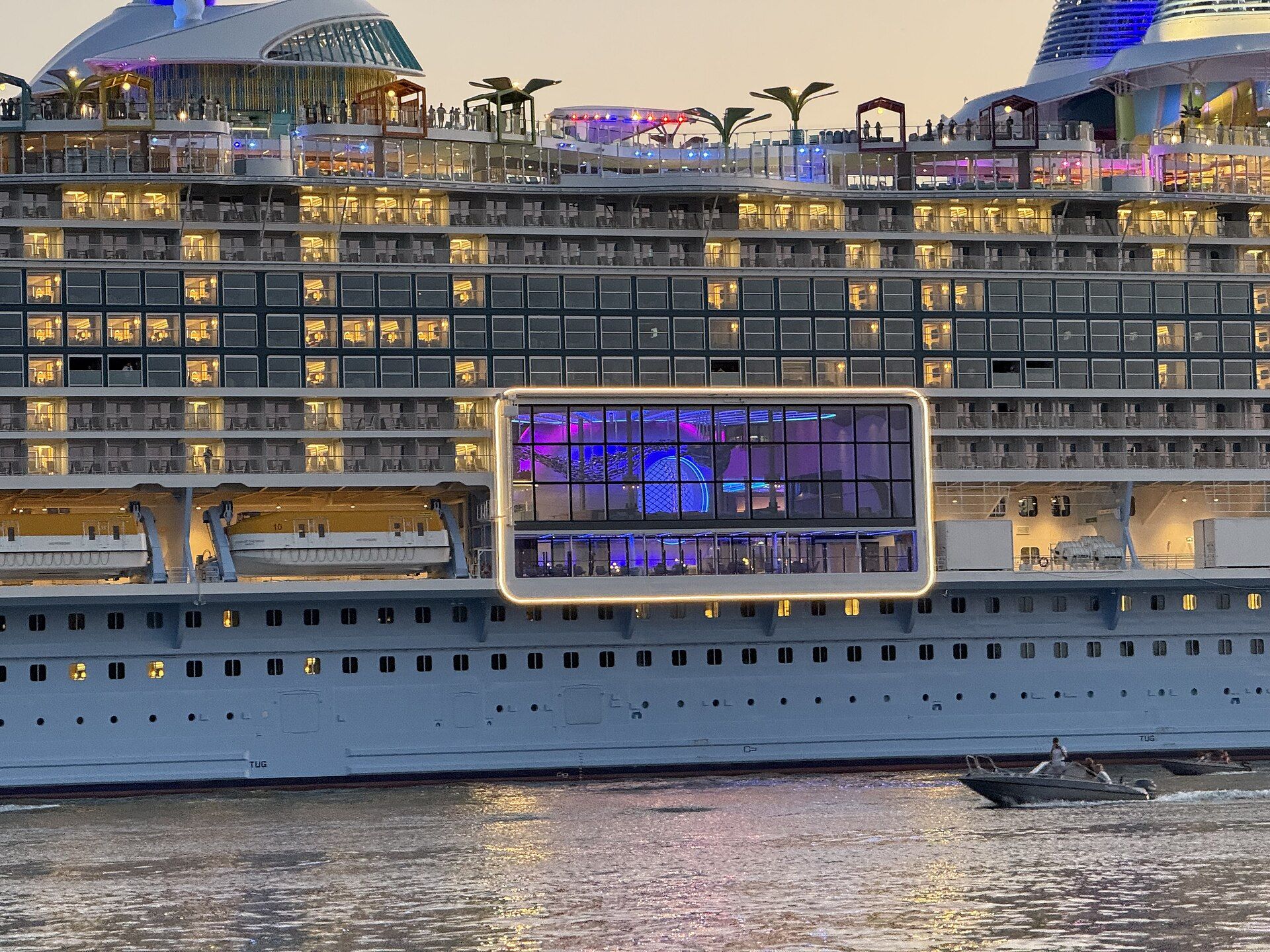
Ship profile
| Gross tonnage | 248,663 GT (registry) |
|---|---|
| Entered service | 16 August 2025 |
| Guests | 5,610 at double occupancy / 7,600 maximum |
| Decks | 20 (18 guest decks) |
| Length | 1,196.9 ft (364.8 m) |
Every figure above is stated in our published Star of the Seas ship guide, which cites its sources — where the guide is silent, this page is silent too.
Cabins
The cabin categories our Star of the Seas guide describes, in its own terms. It is a guide to the range, not a booking inventory — and where no source we rely on states a size or a share of cabins, none is printed.
| Category | What the guide says |
|---|---|
| Balcony — Central Park-facing | Star's guide states its cabin conclusions are Icon's, word for word: Central Park balconies trade sea views for quiet. |
| Balcony — ocean-facing | The sea-view counterpart in the same layout — Star's stateroom count and layout match Icon's, with accessibility and category adjustments the guide notes. |
| Family cabins — Surfside | Surfside is the family district, and the noise map radiates from it; the Ultimate Family Townhouse tops the range. |
| Suites — Suite Neighborhood | The structural answer to full-capacity weeks, in Star's guide's own words. |
Deck plans: read the plan, then check the sandwich
Every cruise line publishes a deck plan for Star of the Seas, and it is the most useful page in the booking process: it shows connecting and accessible cabins, obstructed views, and what sits above and below the cabin you are pricing. We do not reproduce the plan here — no deck-plan image for this ship is licensed for us to republish (we checked our imagery library before building this section), and a plan redrawn from memory would be worse than none. Use the line's official plan, published on the line's own ship pages and shown again when a cabin is chosen, with the legend and the check below.
How to read the symbols
Lines draw their plans differently, so read the key printed on the line's own plan first. These are the common conventions travellers meet across the fleets.
| The cabin number | On most large ships the number's first digits give the deck, and the plan places the cabin forward, midship or aft. Position is half the decision: forward cabins feel the most motion in a head sea, and aft cabins sit near the wake and, on many ships, the evening venues. |
|---|---|
| Connecting cabins | Usually a door symbol or a paired mark between two cabin outlines, sometimes a category letter. An internal door joins the two rooms — right for families travelling together, and worth spotting if you are not: sound carries through a connecting door more readily than through a solid wall. |
| Accessible cabins | Usually a wheelchair symbol in or beside the cabin outline. These cabins are larger, with step-free bathrooms and wider doors, and they exist for the guests who need those features. |
| Obstructed-view cabins | Often shading or hatching over the outline, a category code, or a footnote on the plan. The obstruction is typically a lifeboat, its davits, or part of the ship's structure ahead of the window or balcony. The plan shows where it sits; the line's category notes are what say how much of the view it takes. |
| Elevators and stairs | Drawn as solid blocks, usually in a few matched cores along the ship, with lobbies between them. A cabin beside a lift lobby is the convenient end of the trade and hears lobby traffic; a cabin deep in a corridor run is quieter, and a longer walk from everywhere. |
| Public spaces | Restaurants, theatres, pools, gyms and lounges appear as large labelled areas rather than cabin outlines. They are the raw material of the sandwich check below: the question is never the space itself, but whether it sits directly above or below the cabin you are pricing. |
The quiet-cabin sandwich check
The check experienced cruisers run before paying a deposit: a cabin is only as quiet as what sandwiches it. Work through it on the official plan, in order.
- Find the cabin on the line's official deck plan. Note its deck, its position — forward, midship or aft — and its immediate neighbours on the same deck: other cabins, a lift lobby, a stair core, or a public entrance.
- Open the plan for the deck directly above and find what sits over the cabin. Another cabin is the quiet answer. A pool deck, a buffet or restaurant, a theatre, a nightclub or lounge, a galley, a gym or a kids' area is a flag: pools and buffets start early, galleys work earlier still, and theatres and lounges run late.
- Do the same for the deck directly below. Noise travels both ways, and a cabin over the theatre, a late lounge or a galley hears the show, the clearing-up afterwards, and the morning set-up.
- Read the symbols around the cabin while you are there — connecting door, accessible layout, obstructed outlook (the legend above) — and measure the walk to the lift core you will actually use.
- Decide on the whole sandwich, not the category name. Cabins above and below is the quiet buy. If one side of the sandwich is a public space, price the cabin as the compromise it is — sometimes the fare gap makes it worthwhile — and verify the exact cabin on the plan once more before paying a deposit.
Noisy neighbours — flag them
- Pool and sun decks
- Buffet and restaurants
- Theatre
- Nightclub and lounges
- Galley
- Gym
- Kids' areas
- Elevator lobbies (same deck)
Quiet neighbours — the sandwich
- Another cabin directly above
- Another cabin directly below — together, the cabin sandwich
On Star: run Icon's check, on Star's own say-so
Star's own guide states that every cabin conclusion from the Icon guide applies word for word: Surfside is the family district and the noise map radiates from it, and Central Park balconies trade sea views for quiet. Run the same above-and-below check around Surfside first.
Cabins to think twice about
Surfside sets the noise map
Star's guide is explicit that every cabin conclusion from the Icon guide applies word for word: Surfside is the family district and the noise map radiates from it. Cabins near it are family-convenient and family-loud.
Central Park is a trade, not a discount
Central Park balconies trade sea views for quiet — the same deliberate swap as on Icon. Book it for the quiet, not by accident.